Mad Sad Glad retrospective
A retro about how the sprint felt. Everyone sorts their moments into mad, sad and glad, so frustration and disappointment are said out loud before the team decides what to change.
3 columns · 30 to 45 minutes · Free, no sign-up
When to run a Mad Sad Glad retro
- After a tough sprint, a missed deadline or an incident.
- When you sense a tension that never comes up in a regular retro.
- With a new team, to learn what matters to each person.
The three columns
Each column asks the team one question. Read the questions out before anyone writes, so everyone answers the same ones.
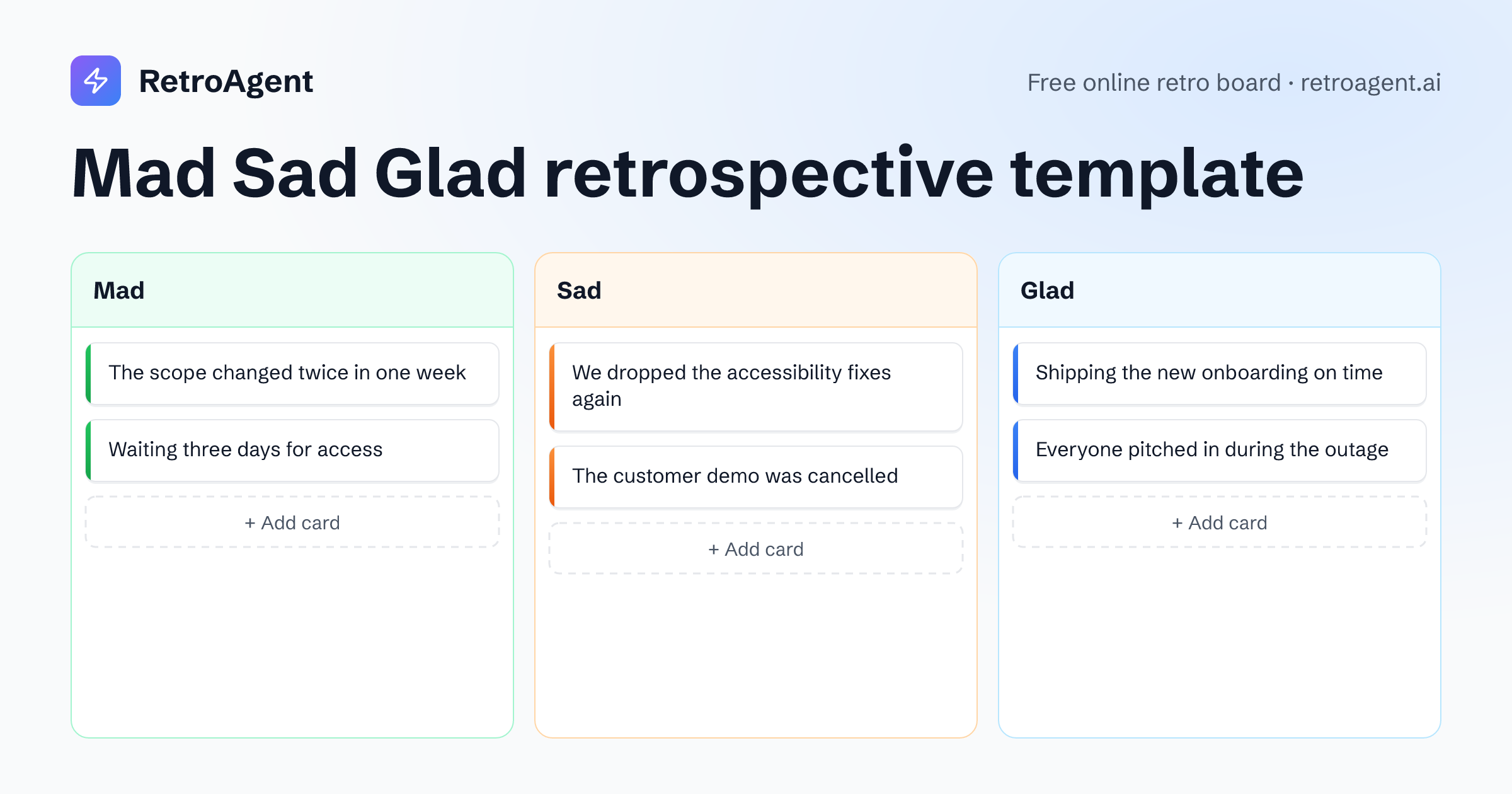
Mad
What frustrated you or made you angry?
For example
The scope changed twice in one week
AnonymousSad
What disappointed you or let you down?
For example
We dropped the accessibility fixes again
AnonymousGlad
What made you happy or proud?
For example
Shipping the new onboarding on time
Anonymous
How to run a Mad Sad Glad retrospective
About 30 to 45 minutes for a team of five to eight, in one shared room.
Open the room
Press Start a retro with Mad Sad Glad: the room opens with the three columns ready, and teammates join from its link with just a name.
Warm up
Every retro opens with a warm-up question. Answers stay hidden until someone reveals them, then everyone reads them at once.
Write in private
Give everyone eight minutes on the shared timer. Anything hard to sign can be posted anonymously. Nobody sees anyone else's cards until the reveal.
Reveal and group
Anyone can reveal the board, after a three-second countdown. Drag cards that say the same thing onto each other to group them.
Talk it through
Listen first: let the Mad and Sad cards be explained before anyone suggests a fix. Talk about Glad last, so the retro ends on what went right.
Agree on action points
Add each decision as an action point from the board's sidebar. The summary lists them, and a retro run under a team keeps them on the team's page.
Formats like Mad Sad Glad
Questions about Mad Sad Glad retros
Why run a Mad Sad Glad retrospective?
How people feel shapes how a team works, but it rarely makes it onto a regular board. Mad Sad Glad asks for it directly, which often brings up the real problem behind a missed goal.
Should Mad Sad Glad cards be anonymous?
Let each person choose. In RetroAgent anyone can tick "Post anonymously" when adding a card, and every card stays hidden until someone reveals the board, so nobody is swayed by who wrote first.
How long does a Mad Sad Glad retro take?
About 30 to 45 minutes. Leave room to listen in the Mad and Sad columns before you move on to action points.
Can we change the columns?
Yes. Rename a column or add one, up to five, in the launcher before you start or in the room's settings during the retro. A card stays with the column name it was written under, so rename a column before the team writes in it.
Do participants need an account?
No. Teammates open the room link and type their name. They can sign in with Google or GitHub at any time and keep everything they wrote.
Ready for a Mad Sad Glad retro?
Your team joins with a link, and nobody needs to sign up.