Rose, Thorn, Bud retrospective
Everyone shares a rose, something that went well, a thorn, something that was hard, and a bud, an idea that could grow. It is short and balanced, and it works for any team.
3 columns · 30 to 45 minutes · Free, no sign-up
When to run a Rose, Thorn, Bud retro
- A light retro for a regular sprint, or for a team new to retros.
- When you want everyone to share a little of each: the good, the hard and the hopeful.
- Mixed groups, such as a project team drawn from several departments.
The three columns
Each column asks the team one question. Read the questions out before anyone writes, so everyone answers the same ones.
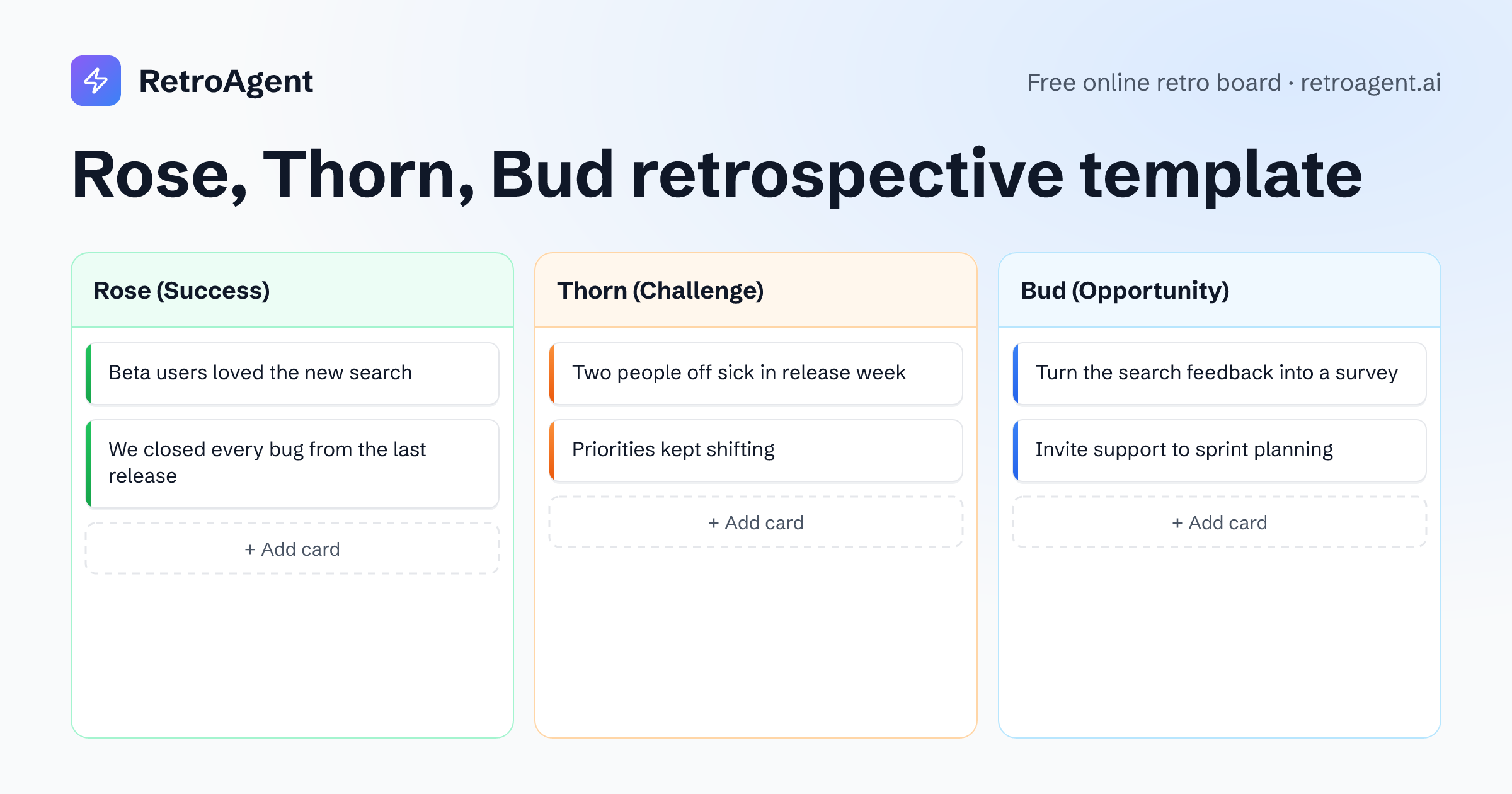
Rose (Success)
What went well, or what are you proud of?
For example
Beta users loved the new search
AnonymousThorn (Challenge)
What was hard, or what hurt?
For example
Two people off sick in release week
AnonymousBud (Opportunity)
What idea or opportunity could grow?
For example
Turn the search feedback into a survey
Anonymous
How to run a Rose, Thorn, Bud retrospective
About 30 to 45 minutes for a team of five to eight, in one shared room.
Open the room
Press Start a retro with Rose, Thorn, Bud: the room opens with the three columns ready, and teammates join from its link with just a name.
Warm up
Every retro opens with a warm-up question. Answers stay hidden until someone reveals them, then everyone reads them at once.
Write in private
Give everyone six minutes on the shared timer, and ask for at least one rose, one thorn and one bud each. Nobody sees anyone else's cards until the reveal.
Reveal and group
Anyone can reveal the board, after a three-second countdown. Drag cards that say the same thing onto each other to group them.
Talk it through
Read the roses and thorns, then spend the most time on the buds: they are where the action points usually come from.
Agree on action points
Add each decision as an action point from the board's sidebar. The summary lists them, and a retro run under a team keeps them on the team's page.
Formats like Rose, Thorn, Bud
Mad Sad Glad
Give feelings a place: what frustrated, disappointed and pleased the team.
Mad · Sad · Glad
Questions about Rose, Thorn, Bud retros
What does Rose, Thorn, Bud mean?
A rose is a success, a thorn is a challenge and a bud is an opportunity that could grow. Each column in RetroAgent carries both words, such as Rose (Success), so the meaning is on the board.
Does Rose, Thorn, Bud work outside software teams?
Yes. The questions say nothing about code, so it works for any group looking back on a stretch of work together.
How long does a Rose, Thorn, Bud retro take?
About 30 to 45 minutes. With three columns and a card or two each from everyone, it fits a regular sprint.
Can we change the columns?
Yes. Rename a column or add one, up to five, in the launcher before you start or in the room's settings during the retro. A card stays with the column name it was written under, so rename a column before the team writes in it.
Do participants need an account?
No. Teammates open the room link and type their name. They can sign in with Google or GitHub at any time and keep everything they wrote.
Ready for a Rose, Thorn, Bud retro?
Your team joins with a link, and nobody needs to sign up.